Whole-House Filtration
Treat water at the point of entry before it ever enters your internal plumbing. Clean, clarified, odour-free water delivered to every shower, sink, heater, and outdoor tap.
How Whole-House Filtration Works
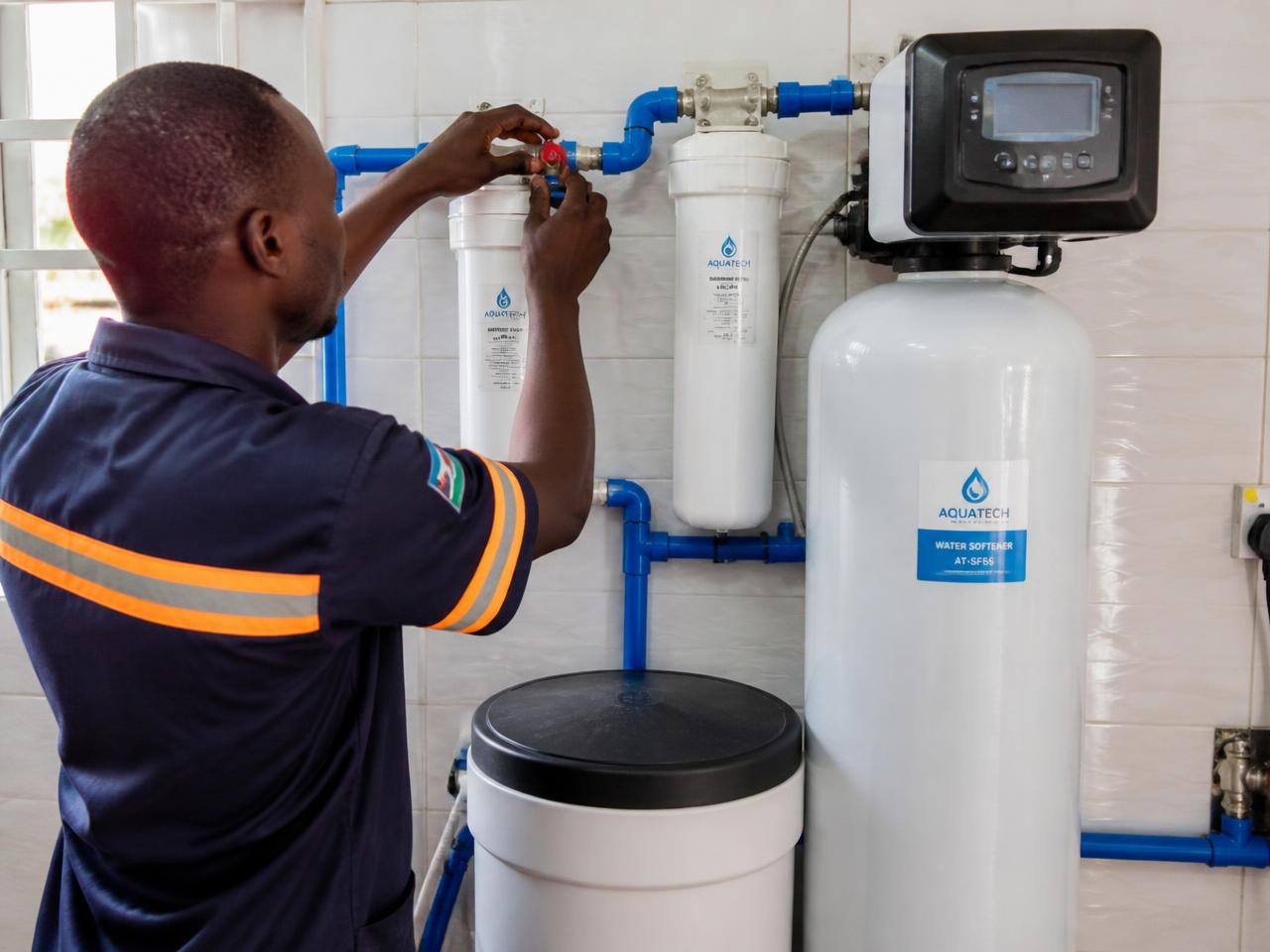
Unlike countertop pitchers or single-faucet attachments that treat a solitary stream, point-of-entry (POE) filtration captures incoming water right at your main utility line or storage transfer point.
By filtering water before it circulates throughout the building, the system traps suspended solids, pipe rust, clay silt, and turbidity. It then passes through activated carbon media to adsorb chlorine, volatile chemical compounds, and unpalatable tastes or odours.
The outcome is consistent: clean water enters your hot water tanks, laundry lines, shower heads, and kitchen faucets simultaneously, shielding your home infrastructure against pipe deposition.
Source Protection vs Point of Use
Individual faucet filters leave your water heater, concealed pipework, washing machine valves, and shower heads exposed to grit and mineral accumulation.
Whole-house filtration establishes a unified perimeter defense, ensuring all domestic water meets a clean baseline from day one.
Signs You Need Whole-House Filtration
Water rarely announces contamination with a single warning. Watch for these everyday household symptoms across your taps and fixtures:
Cloudy or Discoloured Water
Hazy brown, yellow, or murky water caused by suspended soil, silt, or fluctuating municipal supply lines.
Gritty Sand & Sediment
Abrasive particles accumulating in tap aerators, toilet cisterns, shower roses, and washing machine inlet screens.
Rust Stains on Fixtures
Orange or reddish streaks on porcelain sinks, ceramic bathroom tiles, and freshly laundered clothing.
Off Tastes & Chemical Odours
Overwhelming chlorine bleaches, earthy smells, or stale tank odours that make bathing and brushing teeth unpleasant.
What Is Typically Included
Every home possesses distinct occupancy, pipe sizing, and incoming pressure. Tovila builds each system to order:
Sediment Pre-Filter
High-capacity pleated or spun-polypropylene cartridge designed to capture coarse dirt, sand, rust scale, and suspended particulates before they reach downstream media.
Typical retention: 5 to 20 microns (engineered to source turbidity).
Carbon Filtration Media
High-grade catalytic or activated carbon block that chemically adsorbs residual chlorine, organic contaminants, taste taints, and unpleasant volatile organic compounds (VOCs).
Typical performance: >95% chlorine and odour reduction.
Pressure-Rated Housings & Bypass
Reinforced heavy-duty filter housings fitted with stainless-steel bypass plumbing, isolation valves, and upstream/downstream pressure gauges to monitor cartridge saturation.
Typical sizing: matched to 15–45 LPM household peak flow rates.
Frequently Asked Questions
Does this replace drinking water filtration?
No. Whole-house filtration provides clean, clarified utility water for bathing, washing, and plumbing protection. For drinking and cooking water, where microscopic dissolved solids (TDS), heavy metals, or viruses may be a concern, it should be paired with a dedicated Home Reverse Osmosis (RO) system or UV disinfection unit.
How often does the system need servicing?
Cartridge lifespan depends on your household water volume and incoming sediment load. As a general guideline, sediment pre-filters typically require replacement every 3 to 6 months, while activated carbon blocks last 6 to 12 months. Tovila schedules proactive service check-ups to verify pressure differentials.
Will whole-house filtration decrease my home's water pressure?
When properly sized to your home's simultaneous fixture count, the pressure drop across fresh filters is barely noticeable (less than 2–3 PSI). Pressure drops typically only emerge when cartridges become loaded with trapped sediment—which is why our systems include dual pressure gauges.
Can this system handle borehole water directly?
If your borehole produces high levels of dissolved hardness minerals, soluble iron, or microbial risks, a standard whole-house sediment/carbon filter is only the initial step. It should be integrated into a comprehensive Borehole Treatment skid with softening and disinfection.
Pair With Other Home Treatments
Whole-house filtration acts as the foundation. Depending on your source and household health priorities, consider these complementary systems:
Home Reverse Osmosis
Purify drinking and cooking water at the kitchen sink down to 0.0001 microns, removing dissolved solids, salts, and lead.
Explore Home RO →Borehole Water Treatment
If your sediment is originating from private groundwater, see how Tovila handles heavy iron, manganese, and silt.
Explore Borehole Solutions →Whole-House Softening
Neutralise calcium and magnesium hardness to stop scale buildup in your water heaters, kettles, and shower screens.
Explore Softeners →Ready to Protect Your Entire Home's Water?
Book an engineer to test your supply lines, measure your flow rate, and recommend the exact filtration package tailored to your property.