Whole-House Softening
Eliminate hardness minerals before they turn into destructive limescale. Protect hot water heaters, restore rich soap lather, and end chalky streaks across your bathroom tiles and glassware.
How Whole-House Softening Works
Hard water in Ghana is packed with dissolved calcium and magnesium ions leached from deep limestone aquifers and geological strata.
As water is heated or evaporates on surfaces, these dissolved minerals crystallise into rock-hard calcium carbonate scale (calcite). This scale chokes water heater elements, lines internal copper and PEX piping, reduces water pressure, and degrades appliance efficiency by up to 30%.
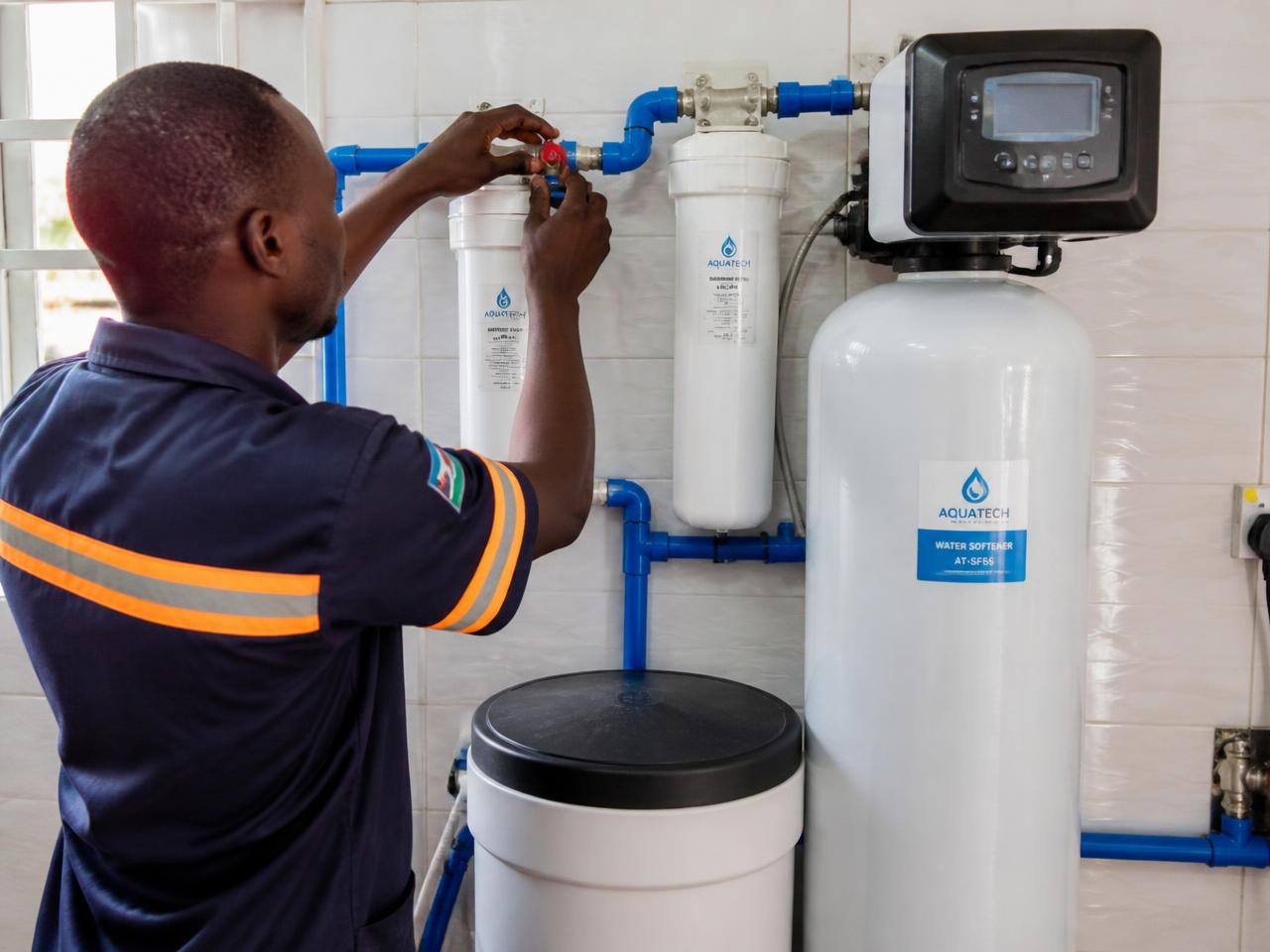
Tovila water softeners utilise ion-exchange resin beads charged with harmless sodium ions. As hard water flows through the pressurized resin vessel, the calcium and magnesium ions bind tightly to the bead surfaces, swapping places with sodium ions. The water emerges genuinely soft.
Periodically, an automated digital control valve washes the resin with a concentrated brine solution, flushing accumulated hardness minerals safely down the drain and restoring the resin bed.
Why Hard Water Costs Money
Just 1.5 mm of limescale buildup on heating elements creates an insulating thermal barrier that forces boilers and water heaters to consume significantly more electricity to achieve target temperatures.
Softened water also cuts soap, shampoo, and laundry detergent consumption by 50% because lather forms effortlessly without reacting with calcium curd.
Signs You Need Whole-House Softening
Hard water leaves visible and tactile evidence throughout the home. Look for these hallmark signs:
Chalky Spots on Glass & Chrome
Stubborn white mineral deposits on shower glass screens, chrome tapware, and dry glassware that resist standard detergents.
Soaps That Won't Lather
Thin, lifeless soap suds that leave a sticky curd layer on skin, dry itchy scalp, and dull, lifeless hair after showers.
Stiff, Scratchy Laundry
Towels and clothing that feel rough and brittle after washing, with colours fading rapidly from trapped mineral crystals.
Kettle & Heater Scale Buildup
Flakes of white crust accumulating in tea kettles, showerheads clogging repeatedly, and water heaters failing prematurely.
What Is Typically Included
Softener sizing must match your household's peak water consumption, fixture count, and tested hardness rating (grains per gallon / mg/L CaCO3):
Food-Grade Ion Exchange Resin
High-capacity cross-linked cation resin beads housed inside a corrosion-resistant composite pressure vessel (FRP).
Typical lifespan: 8 to 12 years under normal municipal or treated borehole conditions.
Digital Automatic Control Valve
Microprocessor-controlled volumetric meter valve that tracks your exact water consumption and schedules automatic backwash and brine regeneration during off-peak hours (e.g. 2:00 AM).
Metered demand control eliminates salt and water waste.
Heavy-Duty Brine Tank & Bypass
High-density polyethylene brine storage tank with safety brine valve assembly, salt grid, and an external bypass manifold for garden watering or maintenance.
Typical salt top-up: every 4 to 8 weeks depending on water consumption.
Frequently Asked Questions
Is softened water safe to drink?
Yes. Water softening specifically targets mineral hardness (calcium and magnesium) by replacing them with tiny amounts of sodium ions. It does not introduce contaminants. However, for individuals on strict low-sodium diets or households wanting the purest possible drinking and culinary water, we recommend pairing the softener with an under-sink Reverse Osmosis (RO) system at the kitchen tap, which strips out sodium and all dissolved solids.
How does softening affect my plumbing long-term?
Water softening permanently stops scale from calcifying inside pipes, valves, shower thermostatic mixers, and water heaters. Existing pipes gradually shed loose mineral crusts, restoring full water pressure and extending the operating lifespan of household appliances by many years.
Does a water softener disinfect water or kill bacteria?
No. A water softener is not a disinfectant. It addresses chemical hardness, not microbiological pathogens or bacteria. If your water source is a private borehole or stored tank, Tovila installs a UV Disinfection unit downstream of the softener to provide complete biological protection.
What routine maintenance is required?
Day-to-day operation is completely automatic. The homeowner only needs to periodically pour water softening salt pellets or coarse solar salt into the brine tank every 4 to 8 weeks. Tovila provides salt delivery packages and an annual preventive inspection of the control valve and resin bed.
Explore Connected Treatments
Water softeners achieve maximum longevity when protected by pre-filtration and paired with specialized drinking systems:
Home Reverse Osmosis Systems
Pair soft whole-house utility water with ultra-pure kitchen drinking water, filtering out sodium, heavy metals, and micro-contaminants.
Explore Home RO →Residential Water Packages
Compare our curated Complete Home and Premium tiers where filtration and softening are pre-engineered into a unified skid.
View Packages →Whole-House Filtration
Ensure sediment and grit are filtered out before reaching your softener valve, preventing resin fouling and premature wear.
Explore Filtration →Protect Your Home From Destructive Hard Water
Our engineers will perform an on-site water hardness titration test and recommend the exact resin capacity for your home.