In any reverse osmosis system, the operator must constantly manage a core physical tension: How much pure water can we extract from the raw feed stream without causing sparingly soluble minerals to precipitate and permanently destroy our membrane elements?
This ratio is known as the Recovery Rate (Y). Setting it too low wastes excessive amounts of feed water and pumping power. Setting it too high rapidly scales the tail-end membranes with calcium carbonate, silica, and sulfates.
The Recovery Equation
Recovery rate is the percentage of raw feed water that passes through the membrane as purified permeate:
Where:
• Qpermeate = Product water flow rate (m³/h or GPM)
• Qfeed = Total feed water flow rate (m³/h or GPM)
• Note: Qfeed = Qpermeate + Qconcentrate
The Concentration Factor (CF)
Because the RO membrane rejects almost all dissolved mineral salts, the salts rejected from the permeate remain trapped in the declining volume of concentrate (reject) water.
The Concentration Factor (CF) calculates how many times more concentrated the rejected brine is compared to the incoming raw feed:
| Recovery Rate (Y) | Concentration Factor (CF) | Brine Volume Remaining | Operational Reality |
|---|---|---|---|
| 50% | 2.0x | 50% of feed volume | Conservative; low scaling risk; standard for single-stage skids. |
| 65% | 2.86x | 35% of feed volume | Typical for commercial two-stage skids on municipal feed. |
| 75% | 4.0x | 25% of feed volume | High efficiency; requires antiscalant dosing and strict SDI monitoring. |
| 85% | 6.67x | 15% of feed volume | Industrial staging; extreme scaling risk without softening/acid dosing. |
Notice how the curve steepens non-linearly: pushing recovery from 75% to 85% increases the salt concentration in the brine from 4x to 6.67x. If raw water contains 30 mg/L of reactive silica, at 85% recovery the brine will contain 200 mg/L — exceeding silica solubility and forming unremovable glassy rock across tail membranes.
The Three Trade-Offs Governing Recovery
1. Osmotic Pressure vs. Booster Pump Energy
As water becomes more concentrated with salts, its natural osmotic pressure increases proportionally (roughly 1 PSI per 100 mg/L of TDS). Higher recovery creates higher osmotic back-pressure in the final stage, requiring the high-pressure booster pump to generate significantly more discharge pressure (and consume more electricity) just to produce the same permeate flow.
2. Cross-Flow Velocity vs. Concentration Polarization
RO systems rely on high cross-flow velocity across the membrane surface to sweep away rejected salts. If recovery is pushed too high, the concentrate flow rate drops dangerously low, creating a stagnant boundary layer (“concentration polarization”) that accelerates crystal nucleation directly on the membrane polymer.
3. Tail Element Mineral Scaling
Sparingly soluble salts like Calcium Carbonate (CaCO3), Calcium Sulfate (CaSO4), Barium Sulfate (BaSO4), and Silica (SiO2) each have strict solubility saturation limits. When the concentration factor pushes these salts past their saturation threshold, they precipitate instantly.
Why There Is No “Standard” Recovery Rate
Clients and junior operators often ask, “What is the normal recovery percentage for this machine?” In professional water engineering, there is no fixed standard percentage.
Permissible recovery is determined strictly during the engineering assessment for that specific water source by modeling:
- Raw water mineral analysis (calcium, magnesium, alkalinity, sulfate, barium, strontium, silica, pH, temperature).
- Calculated Langelier Saturation Index (LSI) or Stiff & Davis Stability Index (S&DSI) of the concentrate stream.
- Antiscalant chemistry and manufacturer saturation dosage limits.
- Vessel array configuration (e.g. single-stage, 2:1 staging, or concentrate recirculation).
Technician Best Practices: Live Skid Verification
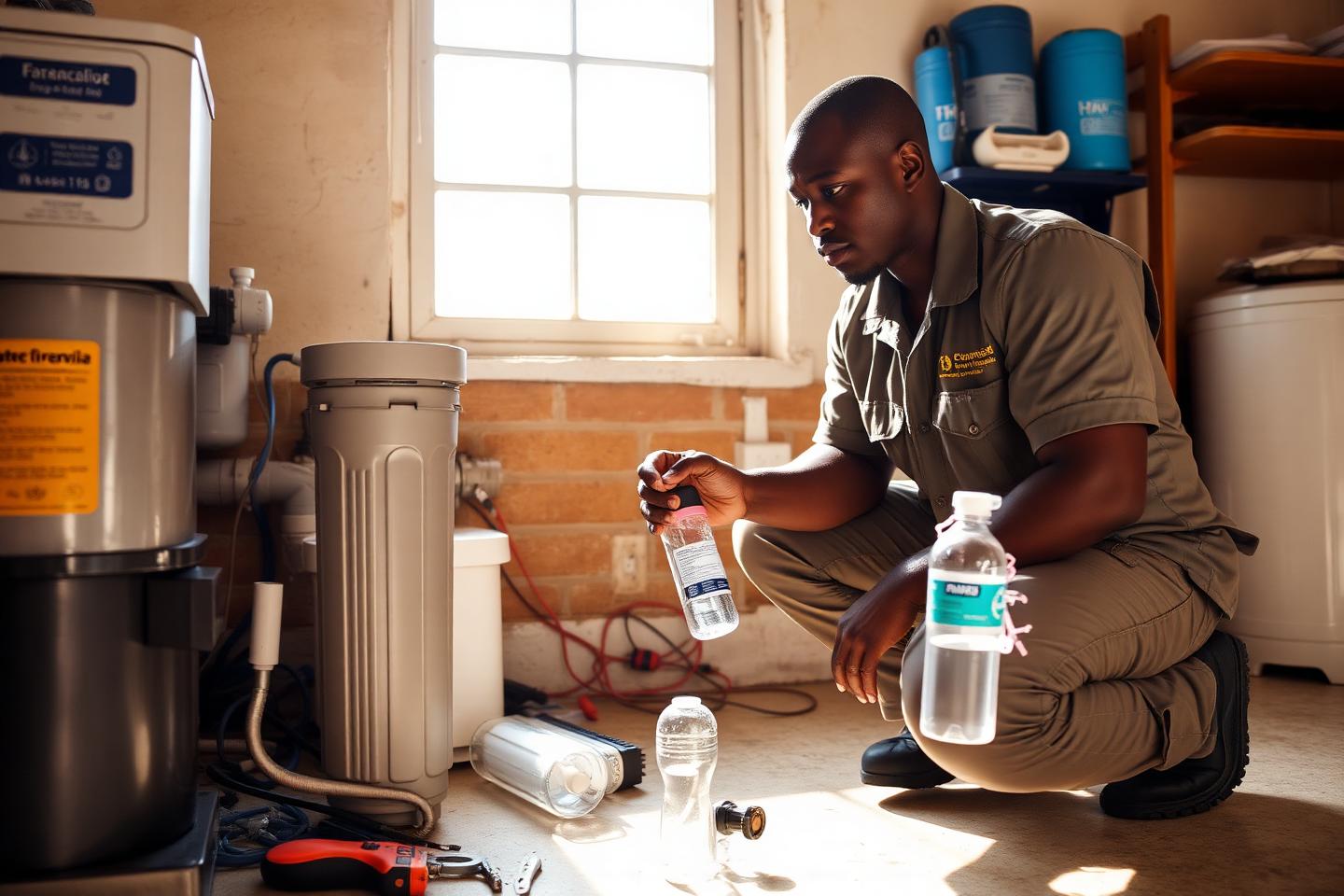
Always verify recovery rates on operating skids by reading calibrated permeate and concentrate rotameters or digital flow transmitters. If you observe concentrate flow dropping while permeate flow remains steady, recovery is creeping upward — check whether your concentrate throttling needle valve has slipped or clogged.