Water Systems for Apartments & Estates
Centralised treatment economics, balanced booster pressure across floors, shared supply reliability, and concealed riser pipework protection for gated communities and apartment complexes.
Why Point-of-Use Filters Fail Shared Buildings
In apartment towers and gated residential estates, individual homeowners frequently attempt to solve poor water quality by installing small under-sink filters inside their private kitchens. While this may provide drinking water at a single faucet, it completely ignores the building's shared mechanical backbone: central raw water storage tanks, booster pumps, common vertical risers, and branch plumbing.
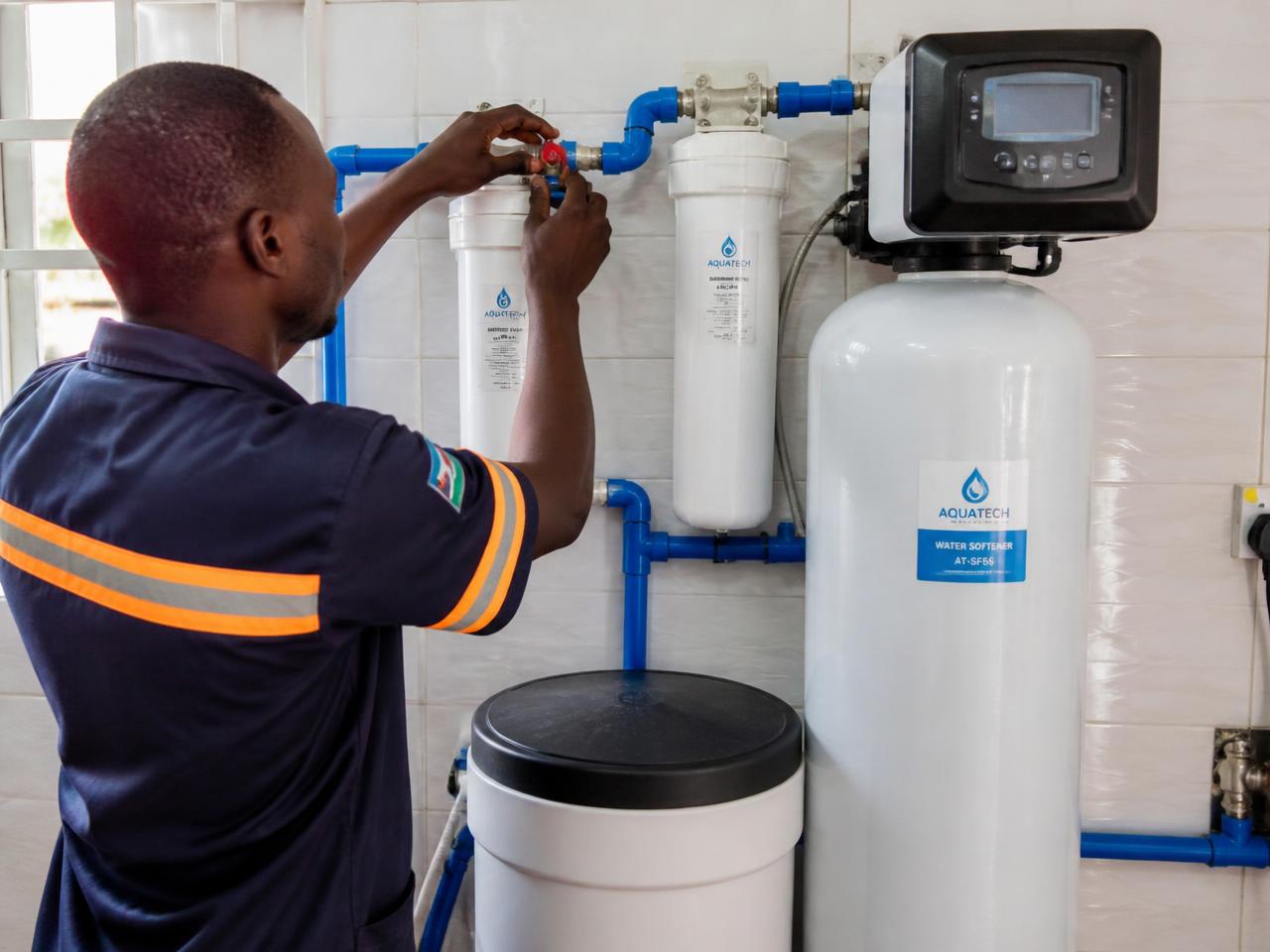
Aggressive groundwater with high iron, dissolved sediment, and mineral hardness silently corrodes shared copper and galvanised pipework, causing pinhole leaks behind walls and premature pump burnout. Centralised water treatment addresses raw water at the intake point before storage and pumping, protecting the developer's infrastructure and delivering pristine, softened water to every unit simultaneously.
Economics of Scale for Estate Developers
Managing and servicing one industrial-grade central plant room requires significantly less operating effort and collective expenditure than coordinating filter replacements across scores of individual residences. Residents enjoy hotel-grade water throughout their homes, while the estate management maintains unified quality control.
Note: Central plant design, storage capacity, and booster pump specifications are confirmed during the site assessment based on unit count, building height, and source water characteristics.
Four Pillars of Multi-Unit Water Architecture
Tovila designs robust community systems that balance hydraulic flow, eliminate pipe corrosion, and guarantee residential water security.
Shared Supply Reliability
High-capacity raw and treated water storage skids engineered to buffer against municipal rationing and seasonal borehole drawdowns. Automated level controllers, multi-stage sediment settling, and transfer pumps ensure uninterrupted delivery to all residential units around the clock.
- Automated raw-to-treated transfer loops with level telemetry
- Redundant pump skids eliminate single points of failure
- Ensures full reserve capacity during public utility cut-offs
Balanced Pressure Across Units
Multi-stage booster pump systems equipped with variable frequency drives (VFDs) that dynamically match motor speed to real-time fixture demand. Maintains balanced, comfortable water pressure from ground floor garden flats all the way up to penthouse bathrooms without water hammer or pipe shock.
- Eliminates pressure drops when multiple households shower
- VFD soft-start motors protect internal plumbing from pressure spikes
- Equalized delivery pressure across all building storeys
Central Treatment Economics
Treating water at the central intake skid provides superior filtration and softening economics compared to scattered point-of-use units. Estate associations benefit from centralized media regeneration, single-point monitoring, and consolidated service contracts that protect community operating reserves.
- Consolidates filtration maintenance into a single central plant room
- Reduces collective household expenditure on bottled water and cartridges
- Simplifies estate facilities oversight through one service partner
Reduced Plumbing Corrosion
Hardness reduction and pH correction neutralize aggressive water chemistry before it enters the building's distribution network. Eliminating soluble iron and acidic mineral corrosion stops pipe thinning, avoids catastrophic concealed leaks, and prevents rust staining on resident bathroom fixtures.
- Stops internal scale and corrosion in shared vertical risers
- Protects residential water heaters, washing machines, and brassware
- Prevents costly building fabric repairs caused by pinhole pipe leaks
Simple Management for Residents & Estate Executives
Whether an estate is managed by a private developer, an owners' association, or a facility management firm, Tovila provides turnkey service contracts. We handle scheduled filter media backwashes, softener salt replenishment, and microbiological laboratory testing, submitting clear compliance summaries to the estate board.
Final plant dimensions, booster pump sizing, and tank storage capacities are confirmed per site based on resident count, peak hydraulic demand curves, and structural roof or ground load limits.
Frequently Asked Questions
Who manages the system — the estate or residents?
The central system is typically managed by the estate facilities team or property management committee under a planned preventative maintenance agreement with Tovila engineers. Individual residents do not need to touch or service the plant equipment.
Does this replace the need for in-unit filters?
In most developments, centralised whole-building filtration and softening treats all incoming water to high aesthetic and plumbing standards, eliminating the need for individual apartment filters. Dedicated under-sink drinking polishers can still be added for residents desiring ultra-pure RO drinking water.
Explore Connected Commercial Solutions
See how Tovila applies centralized water engineering to other shared-occupancy facilities:
Commercial Offices
Plumbed drinking stations, low-maintenance dispensers, cooling tower make-up conditioning, and tenant complaint reduction for commercial buildings.
Explore Office Systems →Schools & Campuses
Safe student drinking water at scale, tamper-resistant hydration hardware, kitchen demand, and predictable institutional budgeting.
Explore School Systems →Upgrade Water Security for Your Apartment Development
Schedule a technical site assessment for your estate or multi-unit property. Our engineers will audit your borehole, evaluate storage and booster skids, and design a centralised system.